Print & Editorial Design

Anyone can make a PDF. Almost nobody makes one worth reading.

Print is the one place design cannot be patched after the fact. Once twelve hundred copies are on a pallet, the widow on page four, the logo at 72dpi and the photograph that turned muddy in CMYK are all permanent. We design the pieces people hold — brochures, catalogues, menus, reports, posters, packaging — on a real grid, with type set properly, and hand them over as files a printer can run without a single phone call back.

years designing for print
6+
bleed on every file we send
3mm
weeks start to finish
2–5
print design editorial design brochure design catalogue design menu design poster design typesetting prepress print-ready files
Sound familiar?

It looked fine on the screen. Then it arrived in a box.

These are the four things people bring us, usually a week before a fair, a launch or a print deadline. Each one is the same mistake at a different stage — treating a printed piece as a document rather than as a designed object.

  • It was laid out in a slide deck

    A brochure built in PowerPoint or a Canva template, chosen for its cover and then filled until the text stopped fitting. Nothing lines up from page to page, because nothing was measured — and on paper, where two pages sit side by side under one light, that shows immediately.

  • The printer sent the file back

    RGB instead of CMYK, images at screen resolution, fonts not embedded, no bleed on a design that runs to the edge. Every one of those is a day lost, and they always surface on the afternoon the job was supposed to go on press.

  • Nobody reads past the second page

    Twenty pages set at one size, in one weight, with a headline that is only slightly bigger than the paragraph under it. Without hierarchy a reader has no idea what matters, so they decide nothing does and put it down.

  • In the hand, it feels cheap

    Good design printed on the wrong stock, folded the wrong way, laminated when it should have been left uncoated. Paper is the first thing anyone judges and the last thing anyone specifies — and it costs less to get right than to reprint.

What you get

A piece built to be printed, not exported and hoped for.

Every job runs the same way: we settle the format and the structure before the pixels, design on a grid that holds across every spread, then prepare the files to the spec your printer actually needs.

01

Grid and type system

The invisible half. It's why a good layout looks calm and an improvised one looks busy, even when they carry the same words.

  • Margins and baseline grid sized to the format
  • Type scale with a real hierarchy
  • Paragraph and character styles set up
  • Widows, rivers and hyphenation dealt with
02

Editorial layout

Pages arranged around the argument the piece is making, in the order somebody reading it would actually want them.

  • Page-by-page flow and pacing
  • Images cropped, retouched and colour-corrected
  • Charts and tables redrawn, not pasted
  • Captions, folios and running heads
03

Prepress done properly

The part that decides whether the print run happens on the day it was booked.

  • CMYK and Pantone conversion, checked
  • 3mm bleed, crop marks, PDF/X export
  • Images at 300dpi, no exceptions
  • Fonts embedded, colours flattened
04

Paper, finish and the printer

Specified with you rather than left to whoever takes the order, because the physical choices are half of how the piece feels.

  • Stock weight and finish recommended
  • Folds, binding and die-lines drawn
  • Quotes gathered from printers we trust
  • Proof checked before the run
Selected work

Four printed pieces, four different readers.

A menu read standing up, a report read at a desk, a chart read in three seconds. Format and typography follow from that, which is why none of these could have been the same layout.

Prosperaize — strategy framework — Print & editorial design
01

Prosperaize — strategy framework

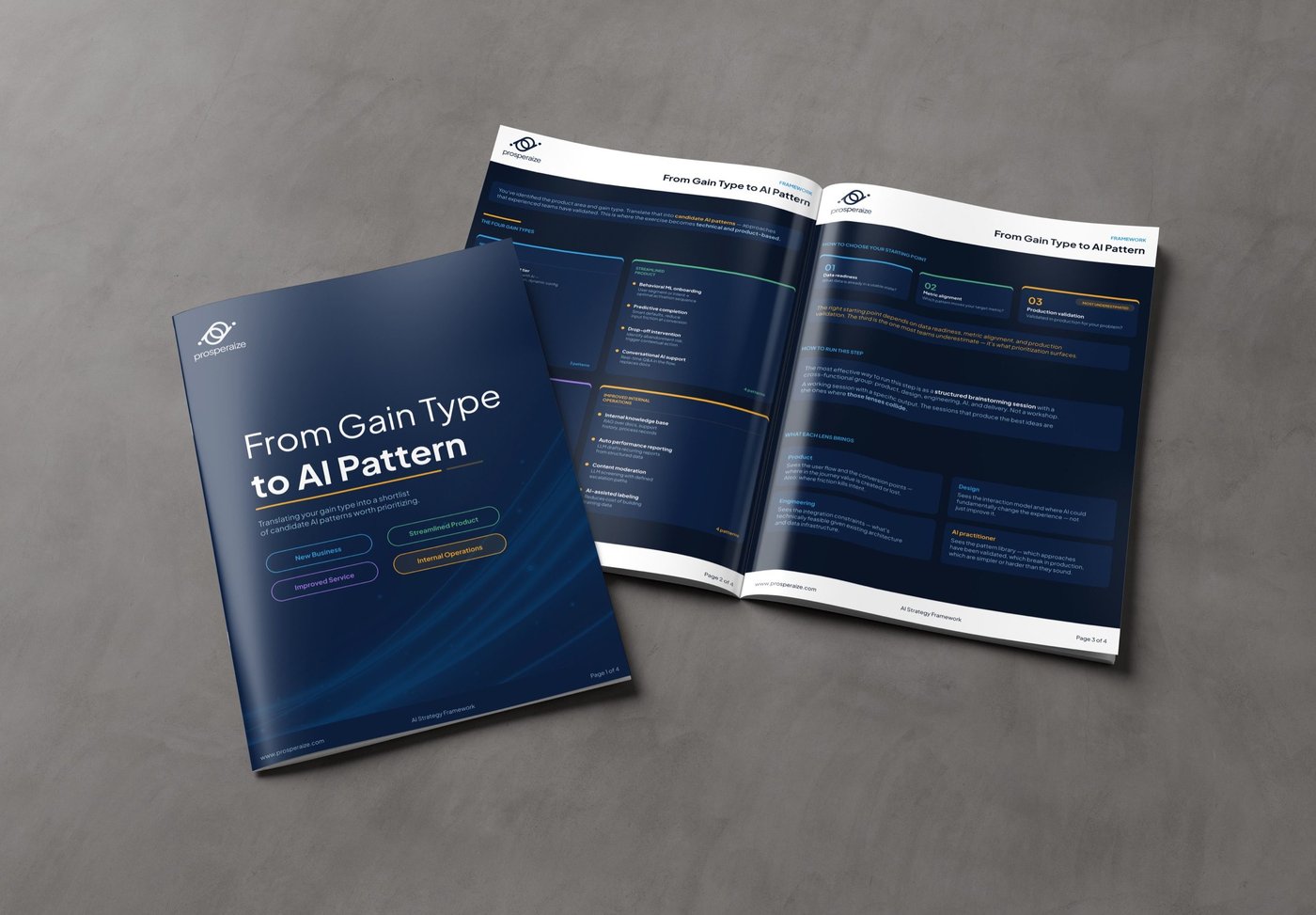
A four-page framework that had to work printed, emailed as a PDF and skimmed on a phone. One grid, one type scale, and a page order built around the argument rather than around what happened to fit.

Molekul — dessert menu — Print & editorial design
02

Molekul — dessert menu

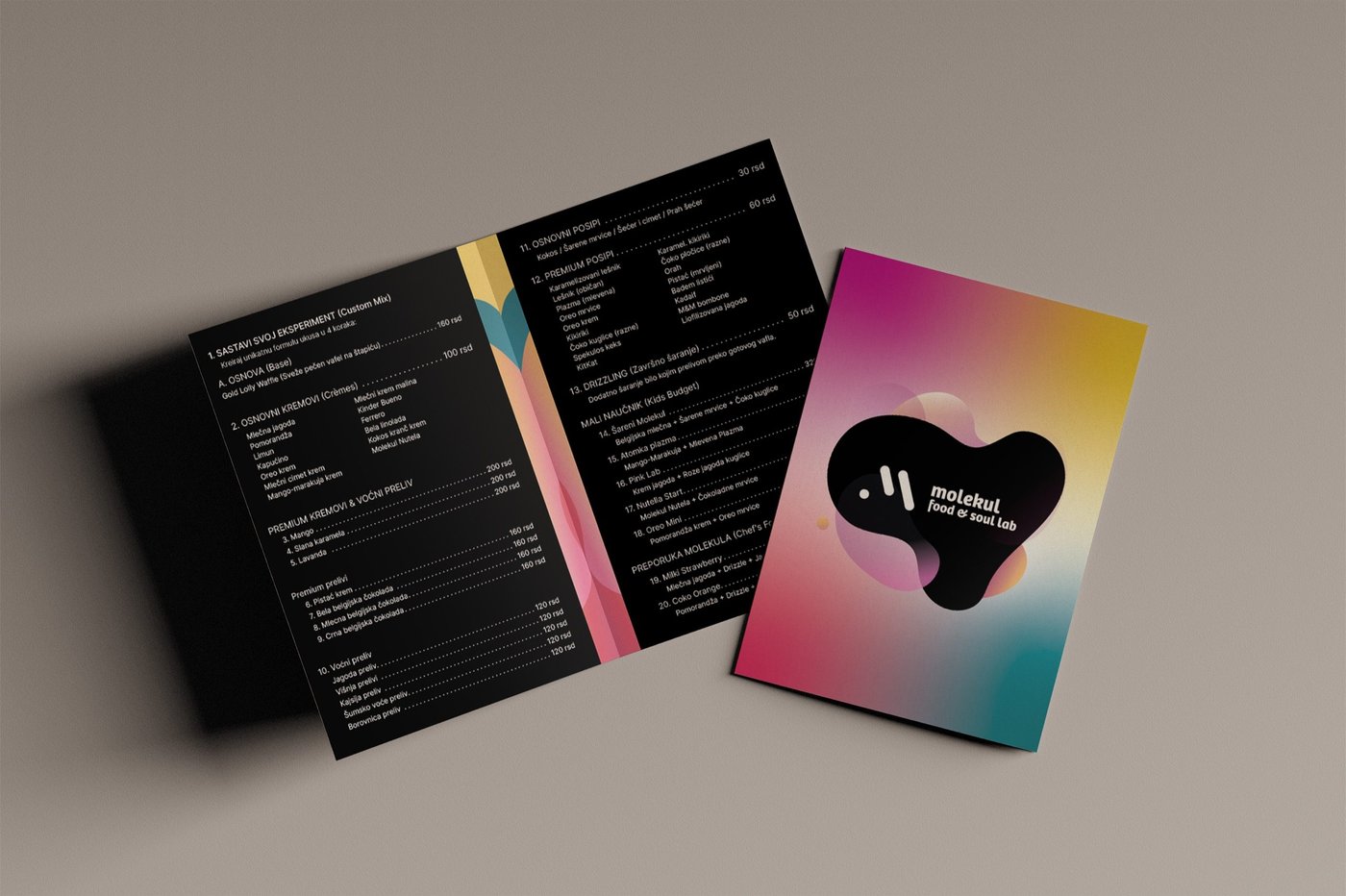
Twenty numbered options, four price columns and a build-your-own section on a single folded sheet. The entire problem was hierarchy: what somebody standing at the counter reads first, second, and never.

Molekul — packaging — Print & editorial design
03

Molekul — packaging

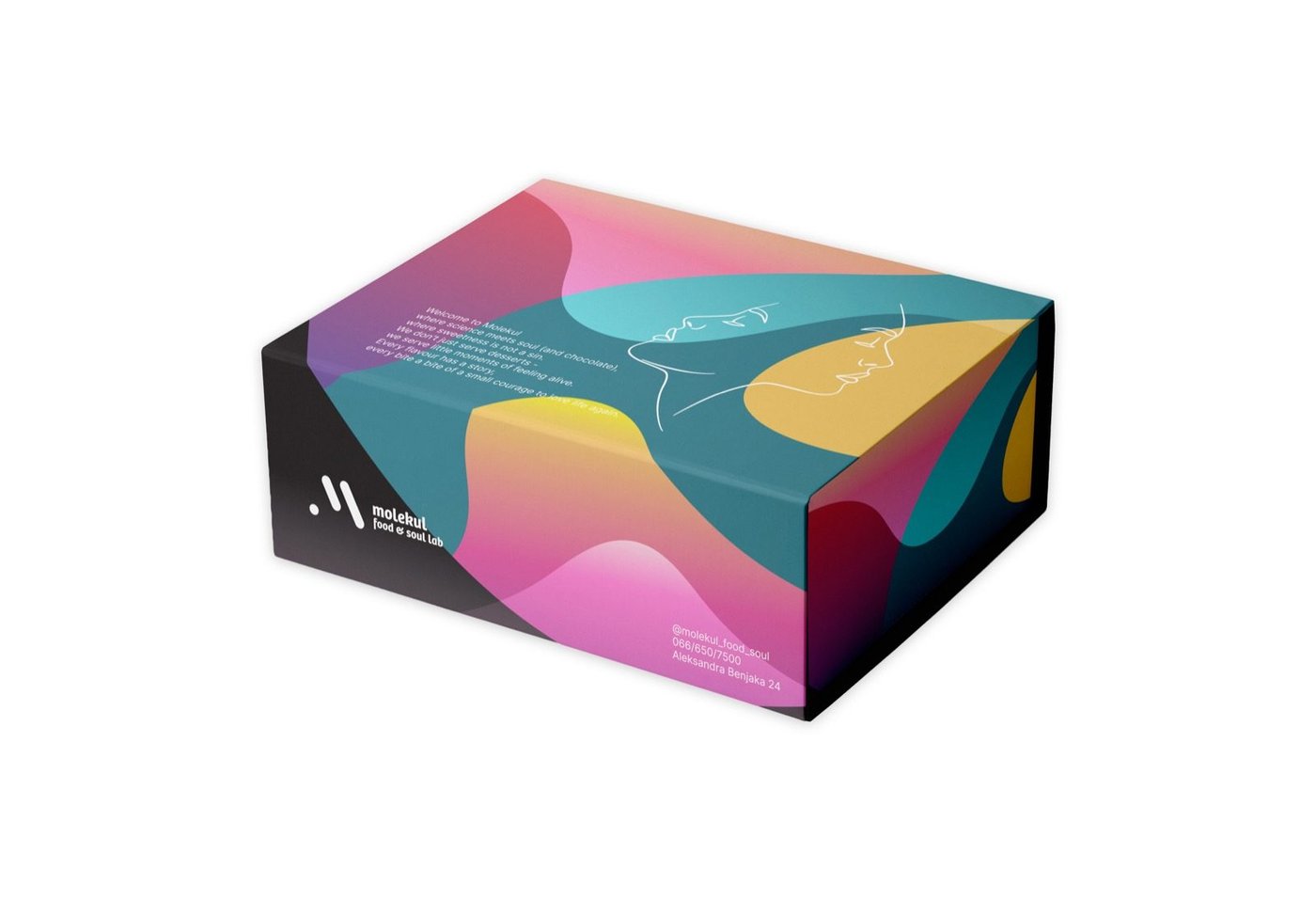
The identity's gradients printed on board instead of glowing on a screen — a different colour space and a different set of compromises. The line of copy on the lid is the part people photograph.

Prosperaize — decision matrix — Print & editorial design
04

Prosperaize — decision matrix

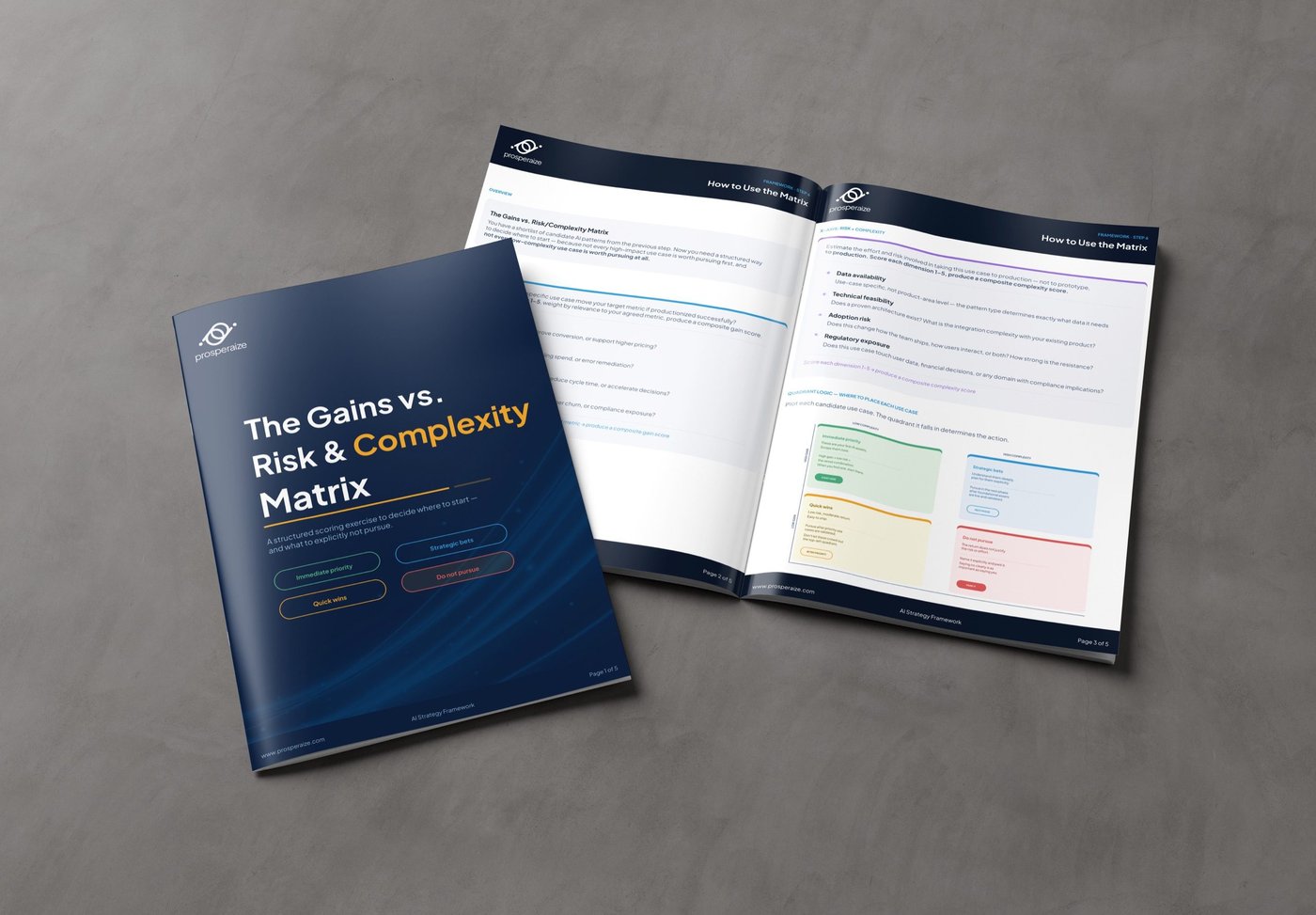
A second piece in the same series: a cover that has to hold up as a thumbnail in an email and as an object on a desk, and a spread where a four-colour matrix carries the argument rather than decorates it. The colour logic is set for coated stock, not for a screen.

How we work

From first conversation to press.

  1. 01
    30 minutes

    Free consultation

    What the piece is for, who picks it up, where it gets handed over, and how many you need. Print run and format change the design more than taste does, so they're the first two questions rather than the last.

  2. 02
    3–5 days

    Content and structure

    We take stock of the text and the photographs you have, and agree the format, the page count and the order before anything is drawn. Real content from the start — layouts designed around lorem ipsum fall apart the day the real text arrives.

  3. 03
    1–3 weeks

    Design and revisions

    Grid, typography and layout, shown as spreads rather than single pages, because that's how the piece will be read. Two rounds of revisions on the laid-out document, before anything goes anywhere near a printer.

  4. 04
    3–7 days

    Prepress and print

    Colour conversion, bleed, marks and a print-ready export to your printer's spec. We collect quotes if you'd like, and check the proof before the run — the last moment anything can still be fixed for free.

Investment

Clear prices, nothing hidden.

Print Essentials

For one piece done properly — a card, a flyer, a menu — rather than a whole campaign.

from €350
Timeline · 1–2 weeks
  • Business card, both sides
  • One printed piece up to four pages
  • Layout on a proper grid
  • Print-ready PDF with bleed and marks
  • One round of revisions
  • All files handed to your printer
Most popular

Editorial & Collateral

The usual choice — a brochure, catalogue, report or menu that has to hold together over many pages.

from €900
Timeline · 3–5 weeks
  • Everything in Print Essentials
  • Multi-page document up to 24 pages
  • Grid and typographic system
  • Image cropping and retouching
  • Charts and tables redrawn
  • Paper and finish recommendations
  • Two rounds of revisions

Campaign & Packaging

When the piece is a set — a poster series, packaging, or everything a fair stand needs at once.

from €1,600
Timeline · 5–8 weeks
  • Everything in Editorial & Collateral
  • Poster or campaign series
  • Packaging artwork and die-lines
  • Signage and large-format files
  • Pantone and special finishes
  • Printer liaison through to the proof

Prices are starting points and move with the page count and the number of pieces. You get an exact quote after the free consultation. Printing itself is paid directly to the printer, not to us, and stock photography or commercial font licences are billed at cost with your approval first.

Common questions

What people ask before they commit.

01

How much does print design cost?

From €350 for a card and one short piece, from €900 for a multi-page brochure, catalogue or report, and from €1,600 for a series — posters, packaging, or a full set of fair materials. The number follows the page count and how many separate pieces there are. You get a fixed quote after the free consultation, before anything starts.

02

Do you handle the printing as well?

We prepare the files and, if you want, gather quotes from printers we've worked with and check the proof before the run. You pay the printer directly, at their price — we don't mark printing up, because the moment we do we stop being able to recommend the cheaper one honestly.

03

Can you work with the brand I already have?

Yes, and most print jobs arrive that way. If you have guidelines we follow them. If you don't, we'll set the few rules the piece needs — one type scale, one palette, one grid — and hand those over too, so the next piece isn't invented from scratch again.

04

What files do I get at the end?

A print-ready PDF built to your printer's spec, with bleed, crop marks and embedded fonts; a lighter PDF for email and screen; and the source files, yours to keep. If the piece uses a commercial font, the licence is bought in your name.

05

Can I edit the text myself later?

Small changes, yes, if you have the software — but honestly, most clients don't, and that's fine. Text updates are quick for us and quoted as small jobs rather than as a new project. What we do build in is a document made of proper styles, so changing something once changes it everywhere instead of in eleven places by hand.

06

How long does it take?

One to two weeks for a single piece, three to five for a multi-page document, longer for a campaign. The stage that stretches is content — a brochure waiting on final text or product photographs can sit for weeks. Send those early and everything else moves.

07

Do you work with clients outside Serbia?

Yes. Most projects run entirely online, with clients across Serbia and Europe, and files go to whichever printer is nearest to you. If you happen to be in Novi Sad, we're glad to meet in person — and to hand you paper samples rather than describe them.

Everything on a screen is provisional. A wrong colour, a typo, an image that turned out too dark — all of it is a redeploy and an afternoon. Print has no such afternoon. The file goes to press and becomes two thousand identical objects, and every decision that wasn't made deliberately is now made permanently, in a box, in your storeroom.

That single difference is what separates print design from making a document. On paper you are working with real constraints — a fixed page size, a colour space narrower than any screen, a fold that eats three millimetres, a stock that soaks up ink and shifts every tone half a step darker. Design that ignores those constraints doesn't fail on the screen where it was made. It fails later, at the printer, or worse, after.

So the work happens in a different order. Format and page count before layout, because a piece that will be read standing up at a counter is not the piece that gets read sitting at a desk. Real text before design, because a grid built around placeholder copy collapses the moment a paragraph runs four lines longer than expected. Paper chosen alongside the colours, not after them. And prepress treated as part of the design rather than as an export setting — bleed, marks, CMYK, embedded fonts, images at 300dpi — because a beautiful layout that a printer has to send back is not finished work.

We design print and editorial pieces for small businesses, studios and cafés in Novi Sad and across Europe: brochures and catalogues, menus and price lists, reports and whitepapers, posters, packaging and the stack of things a fair stand needs. Every one is set on a real grid, typeset by hand rather than by default, and handed over in files that go on press without a single phone call back.
Next step

Half an hour, no obligation.

Tell us what the piece is, when it has to be printed and how many you need. You'll leave with a format, a recommendation and a price — no pressure and no sales script.

Book a free consultation